
Business
Fintechzoom.com in the Crypto Market Cap Landscape


In today’s rapidly evolving financial world, cryptocurrencies are gaining more traction. With their decentralized nature and potential for high returns, cryptocurrencies are making waves in global markets. As the demand for information on cryptocurrency grows, platforms like Fintechzoom.com are playing a crucial role in providing in-depth insights, particularly focusing on the crypto market cap. But what does the crypto market cap mean, and why is it essential for investors and traders?
In this article, we will explore the significance of the crypto market cap, how it’s calculated, and the invaluable insights that Fintechzoom.com provides for anyone interested in understanding the crypto market better.
What is Crypto Market Cap?
The crypto market cap is a key metric used to measure the total value of a cryptocurrency in circulation. It is one of the most commonly used indicators for investors and analysts to determine the overall size and significance of a particular cryptocurrency in the market. The market cap is calculated by multiplying the current price of a cryptocurrency by the total circulating supply of that coin or token.
Formula for Market Cap Calculation:
Crypto Market Cap = Current Price of the Coin × Total Circulating Supply
For example, if a cryptocurrency like Bitcoin (BTC) is priced at $50,000 and there are 18 million BTC in circulation, the market cap of Bitcoin would be:
Market Cap = $50,000 × 18,000,000 = $900,000,000,000 (or $900 Billion)
The crypto market cap can be a crucial factor in determining the stability and potential growth of a particular cryptocurrency. Generally, cryptocurrencies with a higher market cap are considered more established and stable, while smaller cryptocurrencies (often referred to as “altcoins”) with a lower market cap tend to have more volatility.
Why is Crypto Market Cap Important?
-
Assessment of Stability: As mentioned earlier, a higher market cap usually implies a more stable cryptocurrency. Bitcoin, Ethereum, and other major cryptocurrencies have large market caps, making them less susceptible to dramatic price swings compared to lesser-known altcoins.
-
Market Trends: Investors often track the crypto market cap to gauge the performance of the entire cryptocurrency market. By observing the market cap trends of top coins, they can identify rising trends and make informed investment decisions.
-
Risk Management: A cryptocurrency with a smaller market cap may offer substantial growth potential, but it comes with higher risks. Investors looking to minimize risk often lean toward well-established coins with larger market caps.
-
Liquidity: Larger market caps often correlate with better liquidity. This means that trading these cryptocurrencies is easier due to the higher volume of trades. Traders and investors prefer liquidity as it allows them to enter and exit positions with ease.
The Role of Fintechzoom.com in Tracking Crypto Market Cap
Fintechzoom.com is a leading source of information and analytics for the cryptocurrency world. As more investors dive into the digital currency ecosystem, they turn to Fintechzoom.com for accurate and timely data.
Fintechzoom provides real-time data on market capitalization, the price of cryptocurrencies, circulating supply, volume, and much more. The platform offers comprehensive charts, detailed analysis, and tools that help investors stay updated on the dynamic crypto market.
Let’s dive into some of the critical features that Fintechzoom.com offers regarding the crypto market cap:
1. Real-Time Market Cap Data
One of the most valuable aspects of Fintechzoom.com is its real-time market cap data. By tracking the latest market caps of the top cryptocurrencies, Fintechzoom.com helps investors make quick decisions based on the most up-to-date information. The site continuously updates crypto market cap figures, ensuring users have the most accurate snapshot of the market.
This feature is particularly valuable during volatile market conditions, where prices can change dramatically in a short period.
2. Comprehensive Crypto Market Cap Rankings
Fintechzoom.com offers a comprehensive ranking of cryptocurrencies by market cap. This allows investors to see at a glance how each coin is performing relative to others. By sorting cryptocurrencies by market cap, users can easily compare well-established coins like Bitcoin (BTC) and Ethereum (ETH) with emerging altcoins.
These rankings are important because they provide insights into the relative market positions of different cryptocurrencies. Traders and investors use this data to assess risk, liquidity, and potential for growth.
3. Historical Data Analysis
For long-term investors, understanding historical trends is crucial. Fintechzoom.com offers in-depth historical data on market cap movements, allowing users to analyze how the market has evolved over time. By reviewing these historical charts, investors can identify patterns, which can be critical for making informed decisions.
This data is vital for anyone looking to invest in cryptocurrencies over the long term, as it gives a perspective on how specific coins have performed throughout different market cycles.
4. Market Cap Breakdown by Category
The crypto market cap is divided into several categories based on coin types, including large-cap, mid-cap, and small-cap cryptocurrencies. Fintechzoom.com provides an easy-to-navigate breakdown, making it simple for investors to focus on specific categories that match their risk tolerance and investment goals.
-
Large-cap cryptocurrencies typically have a market cap of over $10 billion and include coins like Bitcoin and Ethereum.
-
Mid-cap cryptocurrencies generally have a market cap between $1 billion and $10 billion. These coins often offer a balance between stability and growth potential.
-
Small-cap cryptocurrencies have a market cap below $1 billion and can experience more volatility, but also may offer the highest growth potential.
5. Live Coin Tracker and Portfolio Management Tools
Fintechzoom.com also provides tools that allow users to track live crypto prices and manage their portfolios. The live coin tracker shows real-time updates of the market cap of all cryptocurrencies, which helps traders and investors keep a close eye on their holdings.
Investors can use these tools to set alerts and get notifications about significant changes in market cap or price movements of specific cryptocurrencies. These features enhance decision-making processes and help investors stay ahead of the market.
How to Leverage Fintechzoom.com for Crypto Investment
To maximize the potential of Fintechzoom.com when tracking the crypto market cap, consider the following tips:
-
Monitor Market Trends: Regularly check the market cap of the top coins to identify trends. Is Bitcoin gaining market share while smaller coins are losing ground? Such trends can indicate where the market is heading.
-
Diversify Investments: Use the platform’s rankings and market cap breakdowns to diversify your investments across different categories. Balancing between large-cap, mid-cap, and small-cap coins can help minimize risk while still pursuing growth.
-
Long-Term Investment Strategies: Utilize the historical data available on Fintechzoom.com to plan long-term investments. Pay attention to how market cap movements correlate with price movements to predict future trends.
-
Utilize Alerts and Notifications: Set up alerts on Fintechzoom.com to stay informed about significant shifts in market cap or prices. This real-time information will enable you to act swiftly and capitalize on market opportunities.
Conclusion
The crypto market cap is a fundamental metric in the cryptocurrency world, and platforms like Fintechzoom.com are vital for providing real-time, accurate data on these figures. Whether you’re a seasoned investor or just getting started in crypto, understanding the market cap of cryptocurrencies is essential for making informed decisions.
With the insights provided by Fintechzoom.com, you can track the latest trends, analyze historical data, and manage your portfolio effectively. Stay ahead of the curve by using these tools to make smarter investment choices and navigate the dynamic world of cryptocurrency.

Achieving strong profit margins in the trucking industry is increasingly challenging amid rising fuel costs, fluctuating demand, and a tight labor market. However, companies that apply diligent financial management and strategic accounting techniques can gain clear visibility into their operations and position themselves for profit growth. For trucking companies seeking specialized financial insight, trucking accounting services are an invaluable resource for controlling costs and optimizing bottom lines. Understanding the variety and impact of operating expenses, leveraging new technologies, and refining operational best practices are essential elements in this process.
Developing effective accounting systems not only streamlines back-office routines but also uncovers hidden inefficiencies and enables quick operational adjustments. Reliable, real-time financial data helps trucking businesses control spending, prevent revenue leaks, and make smarter long-term investments. The result is greater profitability, better compliance, and the ability to withstand industry headwinds.
Understanding Operating Costs
Operating costs set the baseline for profitability in transportation and logistics. These expenses typically consume between 85 to 95 percent of a trucking company’s total revenue. Thoroughly tracking and analyzing costs for fuel, maintenance, wages, and compliance requirements allows companies to benchmark their spending and prioritize the most impactful savings opportunities. In 2023, American commercial carriers reported per-mile operating costs of around $2.25, according to the American Transportation Research Institute, with fuel accounting for approximately 28% and driver compensation accounting for roughly 43% of expenses.
Controlling these costs directly impacts profit margins. Companies that regularly analyze their financial statements can quickly respond to cost spikes and spot trends that signal waste or inefficiency. Knowing where the money goes ultimately helps businesses set accurate rates, quote profitable contracts, and plan for long-term stability.
Leveraging Technology for Financial Management
Modern technology is transforming how trucking companies manage their books and daily operations. Transportation Management Systems (TMS) have become central to high-performing fleets, blending financial, dispatch, and fleet performance data into a user-friendly dashboard. These platforms allow companies to track profitability metrics in real time, stop accepting loss-generating loads, and negotiate better rates using accurate cost insights.
Automation within a TMS reduces manual entry errors, streamlines payroll, and provides robust reporting vital for compliance and tax purposes. Core processes like load scheduling, invoicing, and GPS fleet tracking all benefit from automation, allowing accounting teams and owners to focus more on tactical decision-making. Selecting and integrating the right software is a key step to building scalable, efficient, and profitable trucking operations.
Optimizing Fuel Efficiency
Fuel consistently ranks as the second-largest operating expense for most trucking fleets. Poor fuel economy can quickly erode profit margins. Trucking companies should adopt robust systems to monitor fuel costs per truck and per route, as real-time analytics can reveal opportunities to optimize route planning, reduce idle time, and eliminate empty miles. When combined with proper driver coaching and vehicle maintenance schedules, companies can trim an outsized portion of their variable costs.
Effective use of telematics and dispatch software data can also help managers evaluate which clients, routes, or vehicle models are more fuel-efficient. Consistent tracking and benchmarking foster a culture of continuous improvement and help businesses remain competitive even as fuel prices fluctuate. More information on cutting-edge fuel-efficiency strategies is widely available in publications like TruckingInfo.

Managing Insurance Expenses
Insurance rates for trucking have risen steadily in recent years, nudging down profit margins. The best way to guard against excessive insurance costs is to invest in safety. Improved safety records, ongoing driver training, and rigorous vehicle maintenance can reduce premiums over time by demonstrating lower risk to insurers. Annual reviews of insurance coverage and solicitation of competitive quotes help ensure that carriers are not overpaying for necessary protections. In parallel, technology solutions such as onboard cameras and monitoring devices can provide the documentation needed to dispute claims, thereby positively influencing premium calculations.
Enhancing Cash Flow Management
Fast, predictable cash flow is the lifeblood of a thriving trucking business. Industry norms of delayed payments from brokers or shippers can strain even the most successful fleets. Top companies implement intelligent billing, automated paperwork, and proactive collections processes to ensure incoming funds cover recurring expenses such as fuel, payroll, and repairs. Maintaining a steady cash reserve also helps safeguard against inevitable payment delays or unexpected expenditures in logistics. Services like freight factoring and digital invoicing improve cash flow hygiene and enable owners to focus on growth rather than chasing receivables.
Implementing Cost Control Measures
Keeping costs in check is crucial for boosting net profit. Regular audits of maintenance schedules, toll expenses, and fleet utilization can reveal savings opportunities. For example, shifting from reactive repairs to scheduled preventative maintenance minimizes both direct repair expenditures and downtime costs. Routing software can help avoid unnecessary tolls, while itemized fuel and repair costs reveal gaps in efficiency and training needs. Tightly monitoring every dollar spent along the supply chain protects against margin erosion and supports long-term business health.
Investing in Driver Training
Driver performance has a direct, measurable impact on the cost structure in trucking. Comprehensive driver training programs not only improve safety but also enhance fuel economy and reduce unnecessary wear and tear on vehicles. Techniques such as proper shifting, minimizing idling, and using auxiliary power units (APUs) instead of engine idling can make a substantial difference in fuel and maintenance expenses. Adopting modern technologies, such as low-rolling-resistance tires, and encouraging eco-friendly driving habits can help companies appeal to shippers with sustainability goals while also improving profit margins.
Conclusion
Effective accounting practices empower trucking businesses to increase control over spending, spot opportunities to cut waste, and invest in sustainable growth. Companies that combine advanced technology solutions, diligent cost tracking, and proactive driver management consistently outperform those that rely on outdated methods. By understanding where money is spent, leveraging industry best practices, and taking a strategic approach to financial management, trucking businesses can protect and grow their profit margins in a rapidly evolving marketplace.
Life’s uncertainties can catch anyone off guard, leaving you with expenses that just can’t wait for your next paycheck. Unforeseen circumstances such as a sudden car breakdown, a medical emergency, or an unexpected bill often require immediate financial attention. In these moments, solutions like MaxLend can provide rapid funding to bridge the gap and help you manage urgent needs.
Short-term loans are a practical option for securing funds when speed and convenience are critical. These products offer a safety net for borrowers who might not have access to traditional loans or who need money much faster than a bank can deliver. However, before accepting any short-term loan, it’s essential to thoroughly evaluate the options and consider long-term effects on your financial health.
Short-term financial products should not be taken lightly. While they’re convenient, the structure and costs of these loans make them best reserved for true emergencies and repaid as quickly as possible to avoid excess fees. Understanding both the benefits and risks is key to making a wise borrowing decision.
For those urgently weighing their options, it’s also vital to seek out reputable lenders and consider alternatives, such as borrowing from family, tapping an emergency fund, or exploring credit union products, which may offer better terms. Most importantly, reviewing expert insights from consumer finance authorities, such as the Consumer Financial Protection Bureau, can help ensure you’re making a well-informed choice.
Understanding Short-Term Loans
Short-term loans are financial products intended to be repaid within a few weeks or months, typically within a year. They usually do not require collateral, making them a popular choice for individuals who need quick access to cash. The application process is generally straightforward, with many lenders approving and funding loans within a single business day, especially with online options.
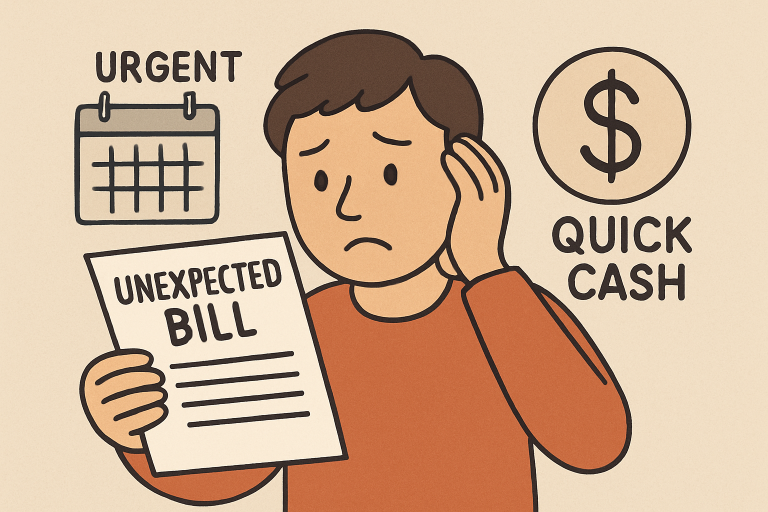
Borrowers turn to short-term loans for a variety of reasons: sudden medical bills, home repairs, utility emergencies, or to cover expenses between jobs. Because approval criteria are usually less strict than for traditional loans, even those with less-than-stellar credit histories may be eligible. However, interest rates are often significantly higher to account for the increased lender risk.
Types of Short-Term Loans
1. Payday Loans
Payday loans are usually small-dollar, high-interest loans that must be repaid by your next paycheck, sometimes within two weeks. They are quick to obtain and rarely require a credit check. Despite these advantages, payday lending is frequently criticized for its high fees and potentially predatory practices. Data from NBC 5 Dallas-Fort Worth shows that annualized interest rates can soar above 300%, trapping borrowers in cycles of debt difficult to escape.
2. Personal Loans
Personal loans from banks, credit unions, or reputable online lenders provide lump-sum funding with fixed repayment schedules, often stretching from six months to a few years. These loans tend to offer more affordable interest rates, especially for borrowers with better credit. They’re well-suited for covering emergencies, consolidating more expensive debts, or tackling one-time financial obstacles. Compared to payday loans, personal loans are subject to stricter eligibility criteria but can offer substantial savings in interest and fees.
3. Paycheck Advances
Some employers and financial service apps allow employees to access part of their earned wages early, usually for a small fee or subscription. These advances offer a relatively low-cost option for handling minor emergencies and can prevent the need for high-interest borrowing. However, overuse of paycheck advances can lead to significant flow problems or reliance on short-term borrowing as a financial strategy. For more information on paycheck advances and how they compare to traditional products, see this helpful piece from Bankrate.
Potential Risks and Considerations
While the primary appeal of short-term loans lies in their accessibility and speed, several important risks merit attention:
- High Interest and Fees: Many products, particularly payday loans, charge fees and interest rates far above those of conventional loans. These costs can quickly balloon if you’re unable to repay on time.
- Brief Repayment Schedules: Loan terms are often very short, making it easy to miss payments. Late fees or rollovers can increase the total amount owed, extending your financial hardship.
- Debt Trap: Borrowers may fall into a cycle of repeated borrowing to cover recurring expenses, which damages long-term financial health.
It’s vital to read all loan documents thoroughly, ask questions about fees or penalties, and plan your repayment timeline before taking out a loan.
Alternatives to Short-Term Loans
Borrowers in a bind should always consider alternatives before selecting a short-term loan. Start by tapping into your emergency savings, if available, to avoid debt altogether. Additionally, talking to family or friends about a small, short-term loan might yield lower costs and less financial pressure.
- Emergency Savings: A well-maintained emergency fund remains the most cost-effective way to handle surprise expenses. Even a small cash reserve can prevent the need for expensive borrowing.
- Family or Friends: A personal loan from someone close could save money on fees and interest. Just make sure to set clear repayment terms and honor your agreement.
- Payday Alternative Loans (PALs): Many federal credit unions offer PALs, which feature better rates and consumer-friendly terms than those of storefront payday lenders. Learn more about PALs and other safer choices from Experian.
Conclusion
Short-term loans can be a powerful resource during financial emergencies, providing quick access to cash for pressing needs. However, caution is essential; high rates and short repayment terms can transform a temporary setback into lasting debt, especially with repeated borrowing. By carefully weighing your choices, reading all loan terms, and exploring lower-risk alternatives, you can meet life’s surprises head-on while safeguarding your financial future.

If there’s one thing today’s customers, employees, and partners can all agree on, it’s this: ethics matter a lot. People want to buy from companies they trust, work for leaders they respect, and partner with businesses that keep their word. Gen Z and Millennials, specifically, prefer to purchase from ethical brands.
Fortunately, ethical excellence is entirely achievable if you bake integrity into the very foundation of how your organization thinks, communicates, and operates. Below are a few practical ways your business can nurture a highly ethical culture.
#1 Put Ethical Leadership Front and Center
Ethical culture always starts at the top. You, the leader, are the clearest mirror for your entire team. Employees watch what you do much more closely than what you say. Your actions must consistently match your stated values.
Be honest and open with your team about the challenges you face. Clearly define all roles and responsibilities to avoid unnecessary confusion. When you are transparent, your employees will gain deeper trust in you. There will be no need for them to second-guess your meaning.
This type of honest leadership is essential for attracting talent now. Younger professionals, especially Generation Z, value ethics in their leaders. Since Gen Z will make up 25% of the workforce soon, this focus on values is a strong retention strategy.
Accountability is much more than just taking responsibility for positive results. Ethical leaders stand behind their work and do not try to place blame on others when problems occur. When your team sees you own a mistake, they learn that it is safe for them to own their mistakes, too. This builds a positive environment.
#2 Always Prioritize Quality
Commitment to quality is one of the most meaningful expressions of ethics in business. You can claim integrity all day long, but if your products or services fall short, those words lose all meaning.
Chasing speed or profit at the expense of moral standards constitutes a failure that harms customers and rapidly erodes a company’s most valuable asset: its good reputation. Shortcuts, ironically, end up being the longest route to success.
The controversy surrounding the defective Paragard intrauterine device (IUD) shows this clearly. Redesigning the device would likely have been costly, but it would have protected patients. Yet, the manufacturer prioritized profits over safety.
The result? Thousands of women who got it implanted suffered from excessive bleeding, perforation, organ trauma, and infections like pelvic inflammatory disease, notes TorHoerman Law.
No wonder they filed the Paragard lawsuit against Teva Pharmaceuticals and Cooper Surgical. The Paragard IUD lawsuit settlement amounts could range between $10,000 and $400,000 per person.
It’s clear: you must prioritize quality from design to delivery. Choose the right materials, double-check the data, review the work one more time, and refuse to cut corners even when deadlines are tight or budgets are stretched.
#3 Promote Diverse Voices and Inclusive Decision-Making
If you want to reduce the risk of making a bad ethical choice, you must include diverse perspectives in your decision-making.
When everyone thinks the same way, you end up with groupthink or a dangerous echo chamber. That stifles dissent and prevents people from challenging questionable ethical choices.
Bringing in people with different life experiences, viewpoints, and cultural backgrounds changes everything. It naturally creates space for healthy debate, thoughtful questions, and alternative ideas that help teams recognize ethical pitfalls before they become real problems.
Instead of one narrow lens, you get a wider, clearer view of the impact your decisions may have on customers, employees, and the community.
Research actually shows that companies with racially diverse employees are more ethical. This is because they value different people and perspectives more than homogeneous companies.
As a leader, you must empower new voices. One smart technique is to push decision-making down to the people closest to the actual work. This instantly broadens the input you receive.
Trust is the most vital currency when inviting diverse leaders to the table. New voices may fear that they won’t be taken seriously. Invite them consciously and value their unique perspectives to make sure they feel safe speaking up.
Making Ethics Your Competitive Edge
A highly ethical business culture is built day by day, decision by decision. It thrives when leaders model excellence, when quality is prioritized, when diverse voices shape decisions, and when transparency is woven into daily operations.
At the end of the day, ethics shape your reputation, your relationships, and your long-term success. They determine how people remember you and how proud your team feels to show up every day.
So start where you are. Lead with heart, model the values you want to see, and build systems that support honesty, fairness, and respect. Bit by bit, you’ll create a culture that not only performs well but also does good, and that is the kind of business the world needs more of.
-

 Technology2 years ago
Revealed: 8093642079 – Find Out Who’s Behind the Number
-

 Technology2 years ago
Detecting AI-Generated Text: Tips and Techniques
-

 Business1 year ago
How Horseback Adventures Foster Connection and Wellness
-

 Technology2 years ago
Raterpoint: Revolutionizing Online Content Evaluation and Feedback
-

 Technology2 years ago
FDXMZ24: A Comprehensive Guide
-

 Entertainment2 years ago
Fappelo: How to Engage with This Exciting New Phenomenon
-

 Technology2 years ago
Perchance AI | Intelligent AI Solutions for Your Business
-

 Blog2 years ago
Bunkralbum: What You Need to Know About This Intriguing Concept